
Last Updated: November 15, 2026
Quick Summary
A diaper bag for back pain should be a two-strap backpack worn high and snug against your back, with heavy items packed closest to your spine. Two straps split the load across both shoulders and keep weight close to your spine, reducing the twisting and side-lean of single-strap bags.
- The American Chiropractic Association recommends wearing both straps and keeping the load close to the body.
- Place bottles, full wipes packs and changing pads against the back panel, with diapers and light clothing toward the outside.
- Tighten straps until the bag sits between your shoulder blades and mid-back, and connect the sternum strap across your chest.
- Switch sides every 15-20 minutes if you carry a single-strap bag or tote.
- If the bottom of the bag rests below your waistline, the torso length is likely too long for you.
Table of Contents
- Why Your Diaper Bag Is Causing Back Pain
- Diaper Backpack for Back Pain: Why Two Straps Beat One
- Diaper Backpack vs Tote: Which Style Protects Your Spine?
- Ergonomic Features to Look For in a Diaper Bag
- How to Pack a Diaper Bag to Reduce Strain
- Lightweight Diaper Bag Options for Everyday Carry
- Fit Guidance for Different Body Types and Postpartum Recovery
- Accessibility and One-Handed Use When Your Back Hurts
- Alternatives to Carrying a Backpack When Pain Flares Up
- Choosing Your DAGS Diaper Bag for Back Pain Relief
- Frequently Asked Questions
Why Your Diaper Bag Is Causing Back Pain
A diaper bag for back pain starts with understanding what the bag is actually doing to your body. Most bags are designed to carry supplies, not to protect the person carrying them. That is the root of the problem, and it is why so many dads finish a day out with a sore shoulder and a stiff neck.
The mechanics are simple. A loaded bag hanging from one shoulder pulls your spine out of alignment. Your body compensates by hiking the opposite shoulder, tilting the pelvis, and tensing the neck. Do that for an hour in a parking lot and you feel it by dinner.
The fix is not a better strap alone. It is a bag that distributes load properly and lets you reach supplies without twisting your spine every ten minutes.
Watch out: the most common mistake is buying a bigger bag "to be safe." Extra capacity invites extra weight, and extra weight is exactly what your back does not need.
Diaper Backpack for Back Pain: Why Two Straps Beat One
Two straps split the load across both shoulders and keep the weight close to your spine, which can reduce the twisting and side-lean that come with carrying a single-strap bag.
Single-strap bags force one shoulder to bear everything. The muscle on that side tightens, the opposite hip drops, and the lower back takes the strain. Two straps, worn snug against the body, keep the load centered and let your larger back muscles do the work instead of your neck.
The American Chiropractic Association on backpack fitting recommends wearing both straps and keeping the load close to the body, advice that applies just as well to a diaper bag as to a school backpack.
Diaper Backpack vs Tote: Which Style Protects Your Spine?
A diaper backpack wins for spine protection in most situations, but the tote still has a place. The choice comes down to how long you carry, how far you walk, and whether you need both hands free.
| Feature | Diaper Backpack | Tote |
|---|---|---|
| Weight distribution | Even across both shoulders | One shoulder or hand |
| Hands-free use | Yes | No |
| Access while holding baby | Easier with side or back access | Requires setting bag down |
| Best for | Long outings, travel, uneven ground | Quick trips, car-to-door errands |
Totes work for short hops where you set the bag down often. The trouble starts when a tote becomes your all-day bag. One shoulder carries everything, and your spine pays for it.
If you are coming from a tote, expect an adjustment period. A backpack feels different at first, but most dads do not go back once they feel the difference on a long walk.
Ergonomic Features to Look For in a Diaper Bag
Ergonomic design is the set of features that decide whether a bag feels fine for ten minutes and miserable for two hours. Look past the fabric and focus on how the bag carries load and how you reach what is inside.
Padded Straps and Weight Distribution
Padded straps spread the weight of the bag across your shoulders. Adjustable straps let you set the bag high and tight against your back, which is where it should sit.
Structured Bags vs Bulky Designs
A structured bag holds its shape and keeps contents from shifting into one lump. Bulky bags without structure sag, and a sagging bag pulls backward on your shoulders, forcing you to lean forward to balance it.
How to Pack a Diaper Bag to Reduce Strain
Packing is where most back pain is won or lost. A well-packed bag can feel lighter than a badly packed one carrying the same items, because the weight sits in the right place and does not shift as you walk. The goal is simple: keep the heaviest items closest to your spine, keep the load from swinging, and avoid carrying anything you will not use.
Start by emptying the bag completely. Restock only what you actually use on a typical outing.
When you reload, place heavy items against the back panel. In a backpack, that means bottles, full wipes packs, and a changing pad go closest to your spine, with diapers and light clothing toward the outside. Keep the load symmetrical: one heavy bottle on the left and nothing on the right will make the bag list, and your body will lean to compensate. If you carry two bottles, split them across the bag or place them side by side against the back panel.
When everything has a place, you reach in and grab what you need instead of bending and twisting to search.
Adjust the straps after the bag is loaded, not before. Loosen the shoulder straps, put the bag on, then tighten until the bag sits high and snug against your back, roughly between your shoulder blades and mid-back. A bag that hangs low pulls backward on your shoulders and forces you to lean forward to balance it. If your bag has a sternum strap, connect it and adjust it so it sits across your chest, not your neck; it stops the bag from swaying and reduces the small corrective movements that tire your back.
Switch sides regularly if you carry a single-strap bag or a tote. If you use a backpack, keep both straps on; slinging one strap over one shoulder defeats the purpose of the design.
Watch out: overpacking "just in case" is the most common mistake. Extra capacity invites extra weight, and extra weight is exactly what your back does not need. Build a light core kit for everyday outings and keep a separate restocked car kit for emergencies rather than hauling everything everywhere.
- Empty the bag and remove anything unused for a week
- Place bottles and heavy supplies against the back panel
- Split heavy items evenly left and right
- Keep diapers and wipes in a dedicated, reachable compartment
- Put light items in front pockets
- Adjust straps so the bag sits high and snug
- Connect and adjust the sternum strap if you have one
- Switch sides every 15-20 minutes if using a single-strap bag
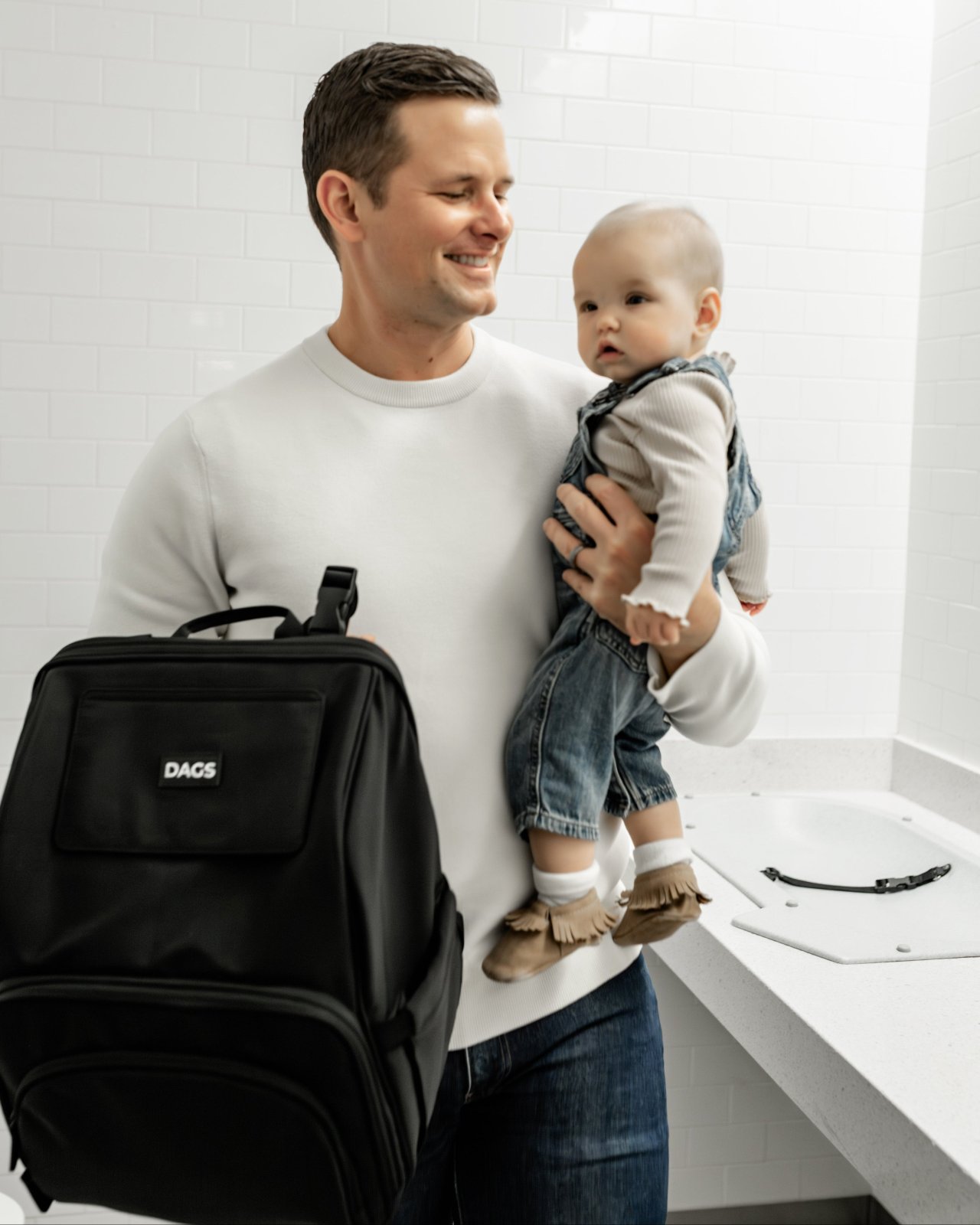
For a step-by-step approach, our guide on how to pack a diaper bag walks through one-handed readiness so you are not digging with a baby on your hip.
Lightweight Diaper Bag Options for Everyday Carry
A lightweight diaper bag is not about flimsy materials. It is about a bag that carries only what you need without adding dead weight through excess padding, hardware, or unnecessary pockets.
Lighter bags reduce the baseline load before you put anything in them, which matters when every outing adds bottles, diapers, and a change of clothes. A bag that starts heavy stays heavy all day.
When comparing options, weigh the empty bag first. Then check whether the lighter bag still has padded straps and structure. A light bag with poor straps will feel worse than a slightly heavier bag with good support. You can browse the full DAGS product lineup to compare weights and layouts side by side.
Fit Guidance for Different Body Types and Postpartum Recovery
Fit matters as much as features, and it changes with body type and recovery stage. A bag that sits well on one frame can ride badly on another, so adjust before you judge. The goal is to get the bag to sit high and snug against your back, with the weight carried by your larger back and shoulder muscles rather than your neck or lower back.
Start with torso length. A bag that is too long for your torso will ride low and pull backward; a bag that is too short will sit high and feel top-heavy. As a fit check, put the bag on with a typical load and tighten the shoulder straps until the bag sits between your shoulder blades and mid-back. If the bottom of the bag rests below your waistline, the torso length is likely too long for you, or the straps need to be shortened. If the bag rides above your shoulder blades and feels unstable, it is too short or the straps are too loose.
Shoulder width matters too. Broader frames need longer strap adjustments and sometimes a wider sternum strap so the bag does not cut into the neck. Smaller frames need snug straps and a sternum strap to keep a wide bag from sliding side to side. A bag that is too wide for your frame will sway with every step, and that sway is what tires your back.
For postpartum recovery, especially after a C-section, reaching and lifting are the hard parts. A bag that requires you to bend and dig puts strain on healing tissue. Side access and one-handed openings reduce how much you twist and reach. Keep the bag light during early recovery and consider having a partner or caregiver carry the main bag while you carry only a small pouch with diapers and wipes. If you are recovering from a C-section, avoid repeatedly lifting a loaded bag from the floor; use a hook, a stroller attachment, or a table-height surface instead.
Comfort needs change over time. A bag that felt fine in the first weeks may feel different as you return to longer outings or start carrying more. Recheck the fit every few weeks: loosen the straps, put the bag on, and tighten until it sits high and snug. If you feel pressure points on your shoulders or neck, the straps are too narrow, too loose, or the load is too heavy.
If pain is sharp, radiating, or persistent, talk to a clinician before assuming a bag will fix it.
Accessibility and One-Handed Use When Your Back Hurts
One-handed access is the feature that separates a bag built for real parenting from one built for a catalog photo. When your back hurts, every bend and reach costs you, so the bag should bring supplies to you.
This is where the DAGS System earns its place. The patent-pending DAGS System offers one-handed access, so you are not twisting to reach a buried pocket. The Help Yourself Suspension holds the bag open like a supply tray, and the Smooth Operator Zippers open with one hand.
The hook matters more than it sounds. Men's bathrooms often have limited changing amenities, and a hook keeps the bag off a dirty floor so you are not bending to lift it back up.
Alternatives to Carrying a Backpack When Pain Flares Up
Sometimes the right move is not carrying anything at all. On flare-up days, alternatives take the load off your spine entirely and let you get through the outing without paying for it later.
A stroller with a dedicated bag attachment carries the weight for you. A small caddy that stays in the car handles the bulk of supplies while you carry only a light pouch for the actual change. For short trips, a compact grab-and-go bag with just diapers and wipes beats hauling the full kit.
The trade-off is readiness. Less on your back means less on hand when something unexpected happens, so keep a restocked car kit as your backup. On good days, go back to the full bag.
Choosing Your DAGS Diaper Bag for Back Pain Relief
Choosing a diaper bag for back pain comes down to three things: even weight distribution, structure that holds its shape, and access that does not make you twist. Get those right and the bag stops being the reason you hurt at the end of the day.
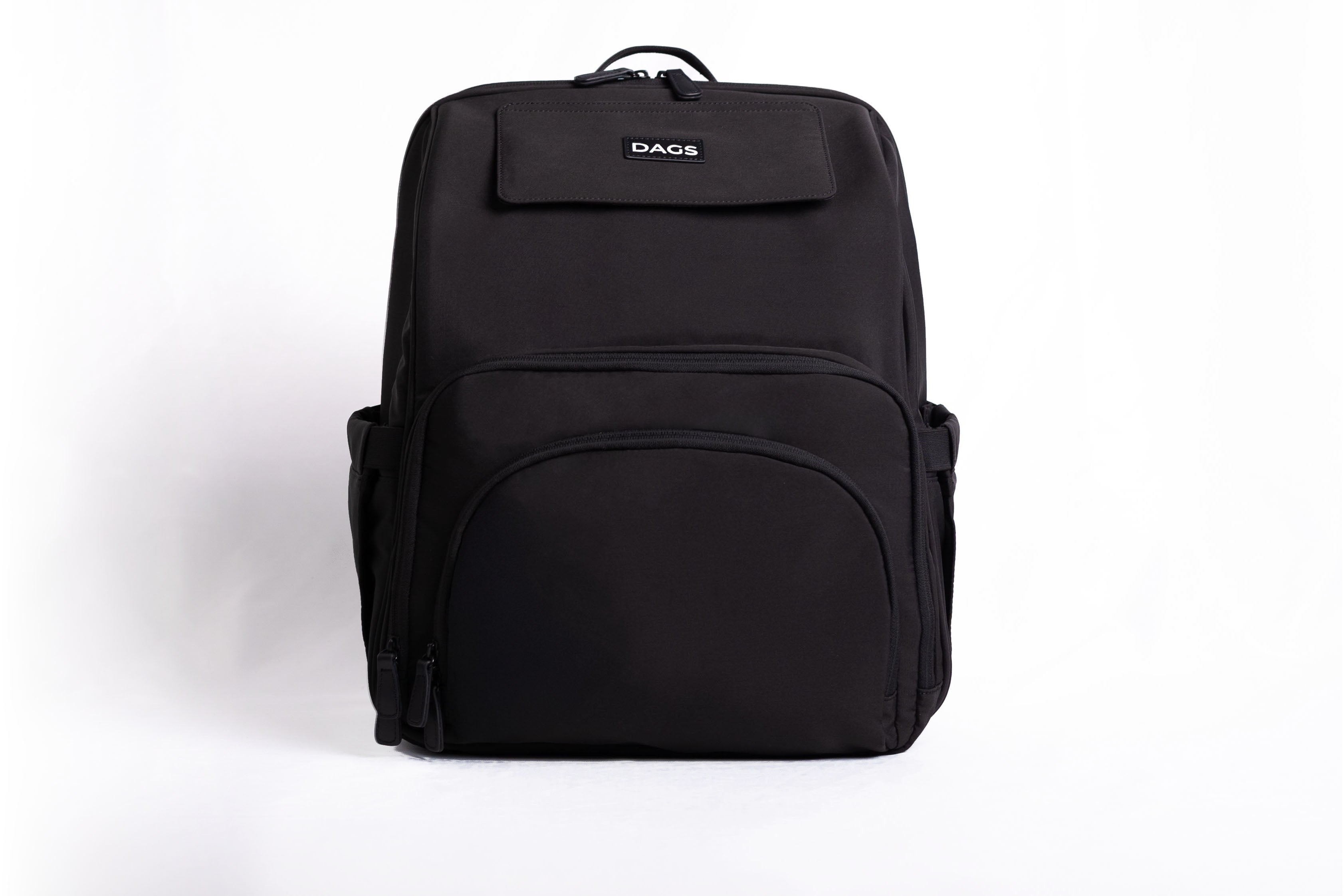
At DAGS, we build around those three. The OG DAG carries the patent-pending system, and its double insulated front pocket is made for bottles or other beverages. It is designed for diaper changes, soccer games, family travel, and the office, not just the nursery.
If you want to know who is behind the design, our about page explains why we build for dads. Machine wash cold on delicate, and line dry.
Your back does not have to ache after every outing. A bag built for one-handed access and even load distribution changes how a day out with your kid feels. Get started with DAGS and carry the load without paying for it later.
Frequently Asked Questions
What type of diaper bag is best for back pain?
A diaper backpack with two padded, adjustable straps distributes weight evenly across both shoulders and the upper back, which reduces strain compared with a single-strap tote or crossbody. Look for a structured design that holds its shape, a padded back panel, and a waist or sternum strap if you carry heavy loads. A diaper bag for back pain should also sit high on your back, close to your body, rather than hanging low and pulling your shoulders backward.
How should you wear a diaper backpack to reduce back strain?
Put the bag on with both straps over your shoulders, tighten them so the bag sits snug against your upper back, and use the sternum strap if your bag has one. Keep the load close to your spine rather than letting the bag sag.
Is a diaper backpack better than a tote for back pain?
For most people with back pain, yes. A diaper backpack vs tote comparison usually favors the backpack because two straps spread the load across your torso, while a tote hangs from one shoulder and forces your spine to compensate. Totes can work for short trips with light loads, but if you are carrying bottles, wipes, changing supplies, and a laptop, a backpack with padded straps and a structured back panel is the more comfortable choice.
How can you make a diaper bag lighter?
Pack only what you need for the outing, decant wipes and creams into smaller containers, and leave backup outfits in the car instead of the bag. Weigh your loaded bag at home; if it feels heavy before you add a baby, you are carrying too much. Repacking before each trip keeps the load manageable and reduces strain on your shoulders and lower back.
Can carrying a diaper bag cause back pain?
If pain persists or worsens, speak to a healthcare professional rather than relying on bag design alone.
What features should you look for in a diaper bag if you have back pain?
Prioritize padded, adjustable shoulder straps, a structured back panel, and a bag that holds its shape when loaded. A diaper bag for back pain should also offer easy access without taking it off, such as a back zipper or one-handed opening, so you are not twisting or reaching awkwardly. Insulated bottle pockets and organized compartments help you avoid overpacking, and a lightweight build keeps the loaded weight down.
