
Last Updated: November 17, 2026
Quick Summary
To organize baby gear, start with clothes: pull everything out, sort into current size, too big, and too small, then label the too-big bin by size range. In small spaces, go vertical with shelves and stackable bins, and use a rolling cart for diapering supplies.
- Keep too-small clothes out of the drawer so what fits stays easy to reach.
- Judge baby clothes by fit, not age labels, since sizes vary between brands.
- A changing table with drawers does two jobs in a small space.
- Pack a diaper bag by zone so diapers, wipes, and a bottle are one-hand reachable.
- Rotate seasonal gear into bins under the bed or on a high shelf.
Table of Contents
- How to Organize Baby Clothes by Size (Start Here)
- How to Organize Baby Gear in a Small Space
- Diaper Bag Organization Tips for One-Handed Access
- Frequently Asked Questions
How to Organize Baby Clothes by Size (Start Here)
Learning how to organize baby gear starts with clothes, which pile up fastest. Sort by size, label it, and keep the next size up findable.
- Pull everything out. Empty the closet, dresser drawers, and storage bins.
- Sort into three piles. Current size, too big, and too small.
- Check the age labels, then ignore them. Sizes vary wildly between brands, so judge by fit.
- Bag the outgrown clothes. Donate what you will not reuse, and store the rest for a younger sibling.
- Label the "too big" bin by size. Write the size range on the outside.
- Put current sizes back first. These go in the dresser drawers and closet at arm's reach.
Keeping too-small clothes in the drawer "just in case" crowds out what fits and slows every change.
Sorting clothes by size is the first step, and these are the moves that keep it manageable.
| Step | What to do |
|---|---|
| 1 | Pull everything out of closet, drawers, and bins |
| 2 | Sort into current size, too big, too small |
| 3 | Check age labels, then judge by fit |
| 4 | Bag outgrown clothes to donate or store |
| 5 | Label the too-big bin by size range |
| 6 | Put current sizes back at arm's reach |
How to Organize Baby Gear in a Small Space
Small homes need vertical storage, stackable bins, and multifunctional furniture. A changing table with drawers does two jobs; a rolling cart moves supplies room to room instead of duplicating them.
- Go vertical with open shelves and a clothing rack.
- Use stackable bins for toys, socks, hats, and accessories.
- Keep a rolling cart stocked with diapering supplies.
- Rotate seasonal gear into bins under the bed or on a high shelf.
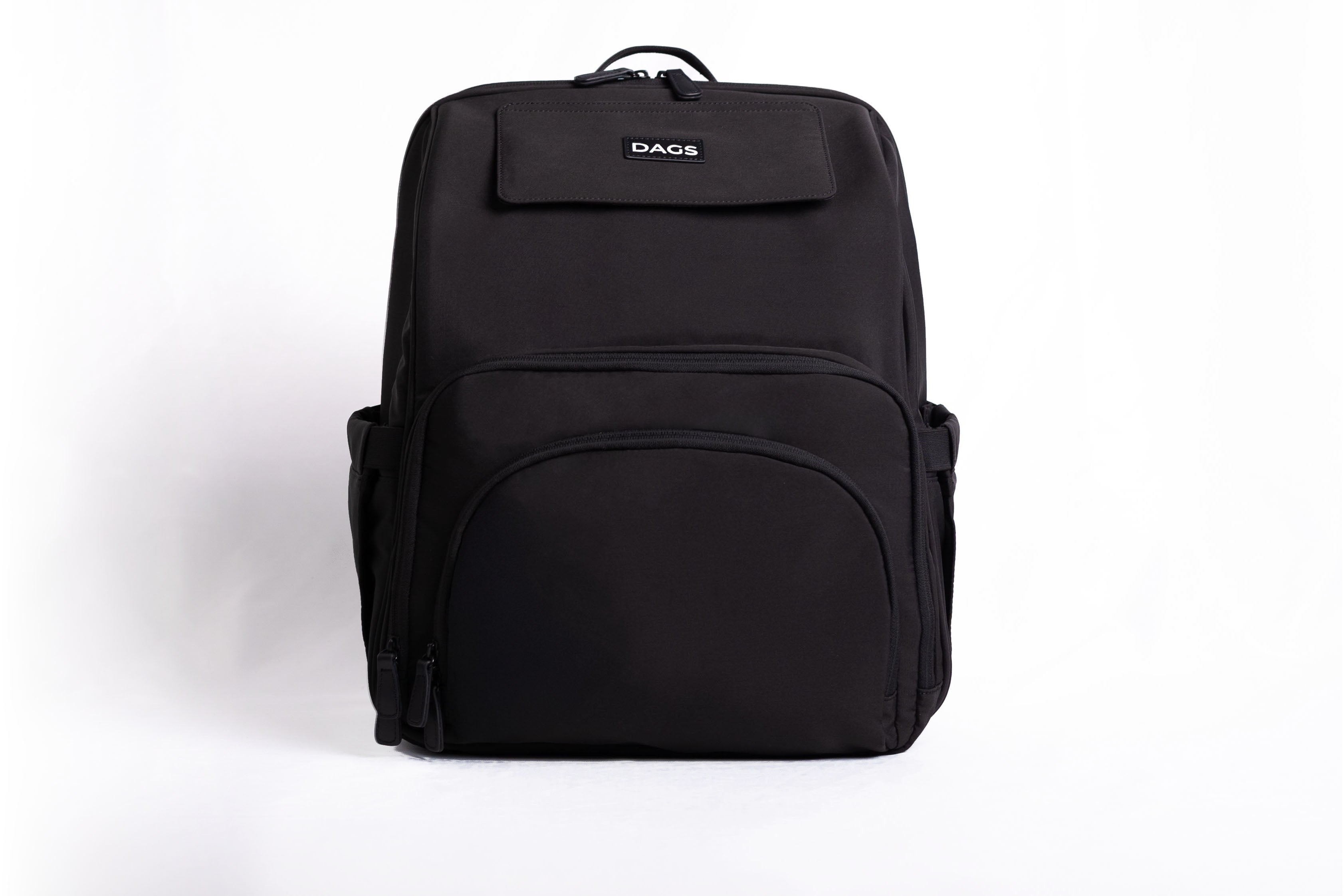
For gear that travels, a compact, well-organized bag does the work of a whole shelf. Browse the full DAGS lineup to see how the bags are laid out.
Diaper Bag Organization Tips for One-Handed Access
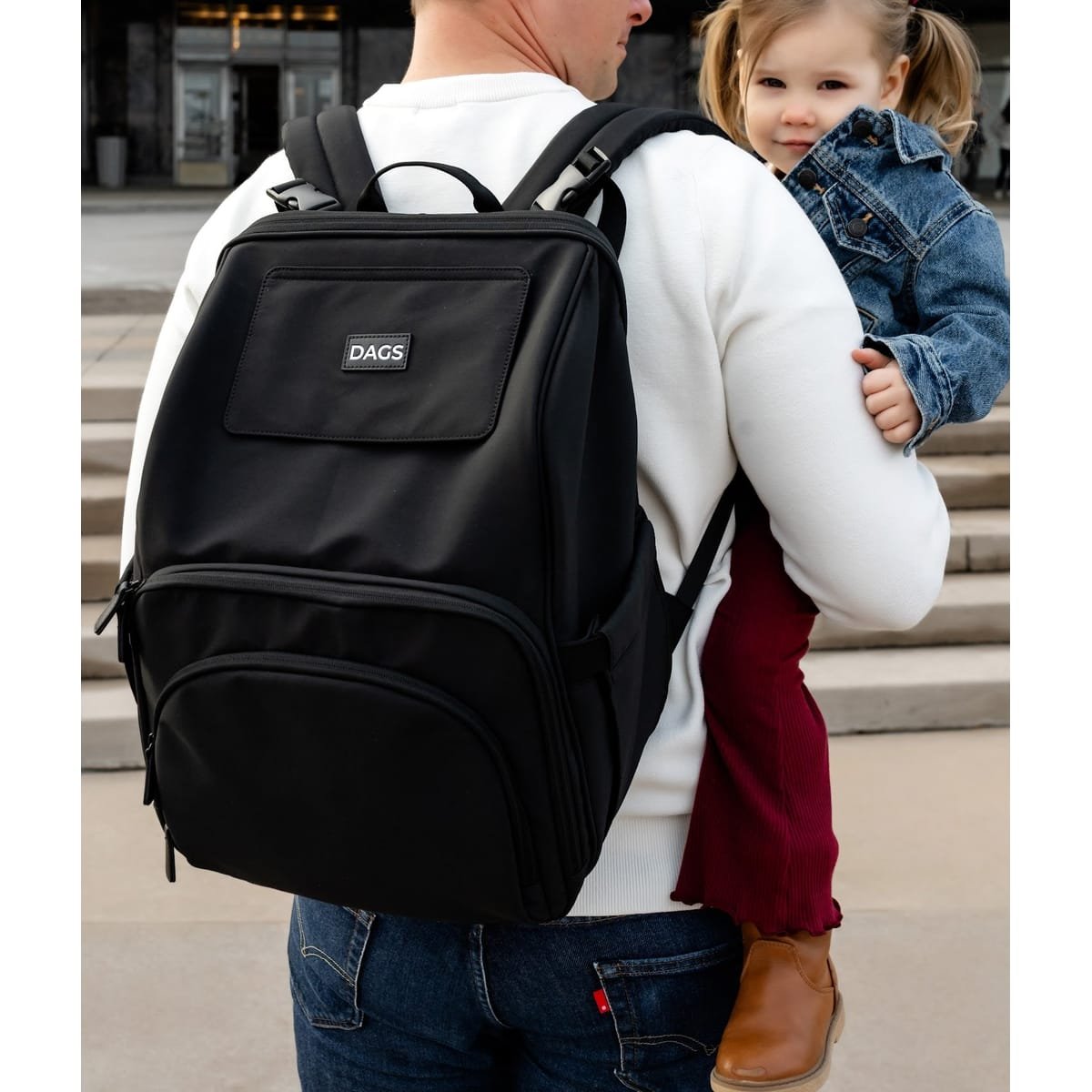
Pack by zone, not one big pocket, so diapers, wipes, and a bottle are where one hand can reach them.
At DAGS, our patent-pending DAGS System includes a Help Yourself Suspension that hangs the bag open like a supply tray, Smooth Operator Zippers for one-handed operation, and a hook that keeps the bag off the dirty floor.
For a deeper walkthrough, read how to pack a diaper bag for one-handed readiness, and to see the bag this system was designed around, look at The OG Dag.
Organizing baby gear is not about having more storage. It is about building a system that survives a growth spurt, a road trip, and a public restroom with no changing table. That is exactly what we build at DAGS: one-handed access, insulated bottle storage, and a hook that keeps your bag off the floor. Get started with DAGS and walk into any outing fully equipped.
Frequently Asked Questions
What is the 3 6 9 rule for babies?
It is a shorthand for clothing sizes at 3, 6 and 9 months, not a scheduling rule. In practice it means sorting baby clothes by size into three clear groups: what fits now, what is too big, and what is outgrown. Keep only the current size in the dresser drawers and store the rest in labeled bins so you can rotate sizes without digging through everything.
How do I organize baby gear in a small space without a closet?
Use vertical storage and multifunctional furniture. A rolling cart holds diapers, wipes and pacifiers next to the changing table, stackable bins go under the crib, and a clothing rack or wall hooks take hanging clothes off the floor. Keep frequently used items within reach at waist height and push seasonal or too-big gear to the top shelf. The goal is easy access, not more floor space.
How often should I check and restock baby gear?
Do a quick weekly check of the diaper bag and changing station, and a fuller monthly reset of drawers and bins. Watch for clothing sizes that stop fitting, diapers running low, and outgrown clothes piling up. When you restock, move outgrown items to a donate or store bin right away so the rotation stays current as your baby grows.
